Planning your Dream Yurt

10 Reasons A Yurt House Might Not Be Right For You

September 15, 2025

Custom Yurt Builds by Shelter Designs

In the market for your very own yurt house? There is nothing more liberating than making and realizing long term plans, and having the vision required to get you to your goals.  At Shelter Designs, we saw the need for environmentally responsible shelters and went from there.  Many of our business days are spent crafting the wooden components for your yurts.  We craft each and every door and window frame, piece of lattice, rafters, center hubs, snow and wind kits here in the shop: focusing on quality, no factory items here!

One of the main pillars of our business has been, and will remain to be great custom service.  We also have the goal of being the best yurt manufacturer in the industry. Both of these principles require listening to our customers, adapting our yurt designs to be better, and providing whatever support our customer’s need to be successful.  I can’t tell you how many hours we spend with each customer, but it is usually a lot.

However, there are times when you come to a fork in the road.  We have found a very unusual fork facing us, one that we never imagined would be there.  We want our customers to be thrilled with the yurts we make and find ourselves writing the following post, in the hopes that it reaches you before you buy a yurt house.  We hope you find these ideas helpful.

Here Are 10 Reasons A Yurt House May Not Be Right For You!

  1. You do not like polyester or vinyl.
  2. You are expecting them to perform like a stick-framed house.
  3. You want your home building to be easy and straightforward.
  4. You value your privacy above all, and you have 5 children.
  5. You have REALLY loud traffic, loud neighbors, loud fights with your spouse, or overhead jets.
  6. You hate dealing with the local government.
  7. You live in a very hot or cold environment.
  8. You want to live off grid, but need/want to be as comfortable as when you lived in your on-grid house with running water, flush toilet, and electric heat.
  9. You have no savings or assets.
  10. You don’t have land.

BONUS: Maybe you’re asking yourself what is a yurt?

Or maybe we’re a perfect match! Read on to learn more about yurt life and Shelter Designs’ yurts for sale!


1. You do not like polyester or vinyl.

I know, it was a very big fad in the 70’s.  If you avoid polyester and vinyl at all costs, you will not appreciate that our fabrics use both.  From our standpoint, these materials have the longest life, and they are strong enough to hold up to the UV, weather, and mold challenges that any structure can have.  Our fabric cover manufacturer: Reliable Tent and Awning, uses cutting edge fabric welding that only works on these materials.  This makes the seams of the fabric covers much more sturdy, and less likely to fray or unravel.  While we sometimes quote for different insulation fabrics, and liners, the cold hard truth is that vinyl works best for your investment.

2. You are expecting them to perform like a stick-framed house.

Let’s face it, humans don’t like to have limits to what they can do, and where they can live.  Look at Phoenix, AZ for example!  We spend a lot of resources keeping our homes at 65-70 degrees year round.  Here in North Western Montana that usually looks like 4-6 cords of wood for the wood stove, or $500+ on propane, or $225 a month on electric heat.  These are the “prices” we pay to live in a beautiful part of the country.  In the summer, many people do not have central air conditioning and often use fans, air units, or jumping in the river to cool off.  People ask us whether they can stay warm in a yurt??  The answer is yes, of course you can.  How much energy you use is related to your yurt set up, and how much yurt insulation you have, and what your heat source is.  We developed the Arctic Insulation to increase the ability of our yurts to retain heat.

Do not buy a yurt house if you are not interested in drops in temperature when your stove goes out, the fact that you may have to stoke your stove at night, or that you may need to wear slippers in the coldest days of winter.  In Montana, these are all things that are very much a part of life, but think hard if you really want to live in an insulated “tent”. Our yurts perform very well under many different conditions, provided you remember what they are, and they are not.

3. You want your home building to be easy and straightforward.

Many folks initially think of a yurt like a tent: you can just pop one up!  However, our yurt design has been highly engineered to be safe and stable and this means you will be constructing a yurt platform.  Depending on the site, and what utilities you are bringing in you will have to organize (or hire a general contractor) for excavation, building permits, many different contractors for the different aspects of the platform build.  Then there is the yurt assembly! Next is the interior build out!  If you would prefer to have all of these things done already, a tiny home may be a better option for you.


4. You value your privacy above all, and you have 5 children.

It is very nice to make dinner while chatting with your husband in the living room.  However if you are writing your dissertation, work from home with little kids, or work the night shift and have a teenager who loves the drums you may not enjoy the sharing.  Yes of course you can frame in a bedroom, and bathroom!  Will the children having a pillow fight in the loft above your head cause problems?  Living in a tiny space requires lots of adjustments in lifestyle and thinking.  If privacy is important for you or your guests, we often suggest you attach a few yurts together.


5. You have REALLY loud traffic, loud neighbors, loud fights with your spouse, or overhead jets.

The qualities that can make a yurt attractive: the ability to hear and enjoy nature more closely can also be detriment depending on the area you are in.  We have heard of customers doing some sound insulation between their snow legs and roof poles, but then you will be missing out on the beautiful lattice inside.  If you need quiet, you should probably think hard before you buy a yurt.  That thunderstorm or birds singing in the morning can be beautifully enthralling, or an annoyance.


6. You hate dealing with the local government.

I know, you bought property in the mountains to get away from rules!  At the very least you will need to research your properties covenants and restrictions, any HOA rules, and deed restrictions.  Local building departments are charged with inspecting any building project in their area, so you are wise to contact them first to find out whether they are yurt “friendly”.  You may find that your local department has not ever permitted a yurt and you will need to submit some more information.  For the most part, after learning that our yurts are highly engineered and that you can get Stamped plans for them they are ready to hear you out.  Then you may have to explain how the typical yurt insulation works (u-value) v.s. the form of insulation they are familiar with (r-value)  Just remember, you are likely paving the way for other future yurt owners!


7. You live in a very hot or cold environment.

If the tarmac melts or the permafrost layer is 6 feet deep you may want to rethink living in a modern “tent” or yurt house.  We designed our Arctic insulation to help our yurts retain heat (as opposed to just the Radiant heat barrier in our Basic Insulation).  By many reports, this does help cut down on your energy consumption.  However a radiant heat barrier works only when your heat source is going, so think if you want to keep that stove going all winter long.  We do have very happy clients with yurts above the arctic circle, but ask yourself: What are your expectations, and who is paying for them?

Hot environments are also something to think twice about.  We are working on a few new ideas to keep our yurts cool.  But let’s be real here.  If the car is hot, local native mammals hide during the day, and the temperature in the shade is close to the temperature in the sun: your yurt will also be hot.  Putting in air conditioning is one measure that can help you stay cool, but take a lesson from nature: the earth moderates temperatures.  An earth-ship can help you beat the heat, or keep from freezing in extreme temps.


8. You want to live off grid, but need/want to be as comfortable as when you lived in your on-grid house with running water, flush toilet, and electric heat.

Bugs, Cold blowing snow, hot searing sun, wind, rain and fluctuating temperatures are all a part of the joy, and hardship of living off grid.  There are so many changes to your lifestyle when you live off-grid.  Every watt of electricity used, every drop of water becomes much more important because it does not just “show” up to your house.

Maybe you think using an out house is great or hauling water from your spring in 5 gallon jugs is invigorating but does your partner?  Will your in-laws dare to visit?  Living off-grid brings unique challenges, and unique joys.  Think hard about whether you really want to find more character by homesteading or living off grid.


9. You have no savings or assets.

While we hope to see this change in the future, many banks are unfamiliar with yurt loans.  While using a line of credit or financing the yurt similar to a car loan may be a possibility, your bank will always want collateral.   Having money in the bank, equity in your house, or other assets will be helpful if you are trying to finance your yurt home.  Our terms of 50% down upon ordering usually mean that you have saved, and have this in hand.  Start calculating your yurt cost with our yurt cost calculator.


10. You don’t have land.

Yes, of course you can probably find someone, somewhere to lease you land to put your yurt house, if you look hard enough.  Please really consider whether all the site prep, platform construction and utility work are something you want to walk away from someday.  Check out our blog regarding this yurt site selection. You will also want to research whether yurts are allowed on the land you are looking at leasing. This guide on buying or leasing land may be able to help you get started.

So there you have it: our very best wishes on your yurt dreams, with a good dose of realism thrown in.  There are challenges with every building or home project, and we truly want you to love your Shelter Designs yurt.  However, a yurt house is not the best home or structure for everyone, in every situation.  We make yurts.  We offer yurts for sale.  At the end of the day, we are very proud of being a small family business that is attempting to change the conversation about what a home/vacation home/office/yoga studio is, or could be, and also what impacts human housing has on the environment. If you’re curious about the cost of your next yurt, check our our handy dandy yurt calculator.

The last thing we want is for someone to buy our yurt house, and then realize it wasn’t the right choice of structure for them.  We would rather not make that sale, and hope that this blog reaches you while you are contemplating your choices.  Good luck!

Frequently Asked Questions

Who should not consider buying a yurt?
A yurt home may not be right for you if you value total privacy, live in extremely noisy areas, dislike polyester or vinyl materials, or expect the same comfort and ease as a traditional house. Check out our blog for a full list of 10 reasons a yurt might not be right for you.

Do I need land to build a yurt?
Yes. To build a yurt, you need land suitable for a yurt platform. Zoning laws, HOA restrictions, and building permits may apply, so it’s important to research your property before purchasing your next yurt.

How much do yurts cost and can I finance them?
Costs vary depending on size, insulation, and features. Most banks are unfamiliar with yurt home financing, but our standard terms include 50% down. Our yurt cost calculator helps estimate the price of your yurt for sale.

What makes Shelter Designs’ yurts unique?
Shelter Designs offers handcrafted yurts for sale with engineered designs, Arctic insulation, and innovative features like the Eco-Yurt™. Every yurt home is made in Montana with attention to quality, custom service, and long-term durability.
Planning your Dream Yurt

Planning your Dream Yurt | Yurt Design

Yurt Interior Design Ideas: Decorating Small Spaces

September 9, 2025

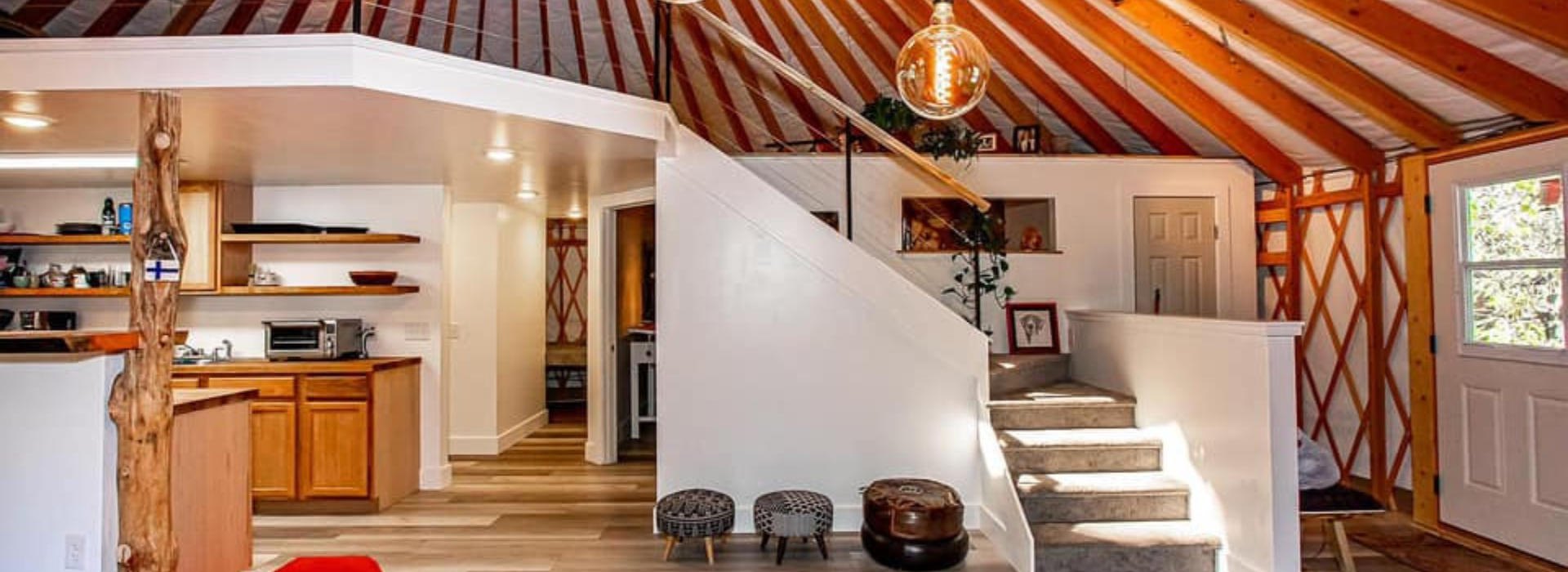
Designing a yurt interior is a unique opportunity to create a space that’s entirely your own. Whether you plan to use your yurt as a residence, office, or are looking for a glamping yurt, this guide offers practical tips and ideas for small-space decorating. From traditional, rustic, to modern yurt interiors, discover how to maximize every inch of your yurt while keeping it stylish and functional.

A Shelter Designs inspiráló tartalmakat kínál a jurta szerelmeseinek arról, hogyan lehet hatékonyan kihasználni a jurta organikus, kör alakú terét a “Jurtás belsőépítészeti ötletek – Kis terek díszítése” című blogján keresztül. A jurtalakók számára gyakran a funkcionális területek maximalizálása a kihívás. Szerencsére számos innováció hozott létre olyan koncepciókat, amelyek élesen foglalkoznak a tárolással, a kényelemmel és az esztétikával. Ahhoz, hogy belsőépítészeti ötletét a koncepciótól a valóságig megvalósítsa, hatékony közlekedésre lehet szüksége. Ha jurta Magyarországon található, a http://www.albavolan.hu/menetrend buszmenetrend segíthet megtervezni a bevásárlási utakat. Megbízható és rendszeres buszjáratokat kínálva ez a menetrend segíthet az idő hatékony kezelésében. Akasszon fel egy függőágyat vagy szereljen fel egy galériaágyat a függőleges tér maximalizálása érdekében. Használjon összecsukható vagy többcélú bútorokat, amelyeket el lehet rejteni, ha nincs rá szükség, így bővítve a rendelkezésre álló területet. Merítsen ihletet a mini házakból és lakókocsikból, amelyek profik abban, hogy minden négyzetcentimétert kihasználnak. De ne feledd, a jurta varázsa az egyszerűségében és a természettel való kapcsolatában rejlik. Használj minimalista megközelítést, amelyet természetes anyagok egészítenek ki, hogy megőrizd egyedi lényegét. Akár nyaralóról, akár elsődleges lakóhelyről van szó, a jurta tükrözze a személyiségedet. A cél egy kompakt, mégis kényelmes otthon megteremtése, amelyet büszkén nevezhetsz otthonodnak.
  1. Traditional Yurt Design

  2. Modern Yurt Interiors

  3. Rustic Yurt Design


1. Traditional Yurt Design Ideas for Small Spaces

Designing A YurtTraditional interior design is a comfortable design style that mixes eclectic styles from historical eras. Achieving this traditional style of design into your yurt is simple, and can be achieved using the following guidelines:
Keep it simple. Traditional interior design is calm and collected, using consistent styles and matching furniture pieces that have clean lines and softly blend in with each other to create a comfortable space.

Keep colors and fabrics simple and muted, avoiding jarring combinations or statement prints. Many traditionally designed spaces have light walls and darker furnishings.


2. Modern Yurt Interior Design Tips

Modern yurt interiors are characterized by a fuss-free approach to form and function. Started in the late 19th century, modern interiors arose from the need to create simpler spaces in rapidly growing spaces. Therefore, they embraced the large windows and industrial elements used in these new buildings to simplify forms.

  • Keep interior and exterior walls light and airy. Choosing tones of white and grey will create an open space that remains comfortable and cozy.
  • Furniture should have clean lines and plain fabric. Avoid loud prints that will disrupt the simplicity of the space.
  • Arrange spaces with an open floor plan. Keep the living room, dining space, and kitchen open to keep the flow of the space simple to navigate.

3. Rustic Yurt Interior Design Inspiration

Rustic interior design can be used to describe a variety of different styles. At its core, rustic yurt interior design is characterized by natural, rough, aged, and casual elements within a space. When integrated with other interior design styles, this style becoming increasingly flexible and can speak to a wide range of individuals.

Rustic Yurt Designs


  • Emphasize natural materials by using wood, stone, burlap, and canvas. Don’t be afraid to use these materials in their raw state, rather than introducing glossy finished materials.
  • Color palettes are traditionally neutral, using warm greens, browns, grays, and cream-tones. Keep these colors as the base of your design, but feel to throw a few vivid colors in there as long as they’re still within an earth-toned world.
  • Rustic yurt interiors are cozy and create an inviting atmosphere. Center your pieces around a fireplace to shape the center of your space and remember that spaces are built to bring groups together in this design.

Designing your yurt interior is a chance to create a space that reflects your style and meets your needs. With careful planning, the right materials, and smart layouts, your yurt can be functional, cozy, and uniquely yours.

Start designing your dream yurt today to customize your layout, doors, windows, and budget.

Things to Know When Decorating Your Yurt

  • Yurts can be customized with doors and windows for optimal lighting and views

  • Interior walls can be framed to create private rooms while running wiring and plumbing

  • Multi-purpose furniture and open floor plans help maximize small spaces

  • Choosing a design style early helps guide color, material, and furniture choices

  • Natural light and minimal clutter are key to making a yurt feel spacious

Frequently Asked Questions About Yurt Design

What are the best interior design styles for a yurt?
Traditional, modern, and rustic are popular yurt interior styles. Traditional designs favor muted colors and symmetrical layouts, modern interiors focus on simplicity and open floor plans, and rustic styles emphasize natural materials and cozy, inviting spaces.

Can I add interior walls and plumbing inside a yurt?
Yes. You can frame interior walls to create rooms and run electrical wiring and plumbing to have lighting, bathrooms, and kitchens anywhere you choose within your yurt.

How do I make a small yurt feel larger?
Use light colors on walls and ceilings, incorporate large windows, keep furniture minimal and with clean lines, and maintain an open floor plan to maximize the sense of space.

What materials work best for rustic yurt interiors?
Wood, stone, canvas, and burlap in their natural or raw states work best. Neutral earth tones like browns, greens, grays, and creams form a perfect base, with subtle accent colors to add warmth.

How can I design a yurt for multiple purposes (guest space, office, rental)?
Plan a flexible interior layout using modular furniture, open floor designs, and strategically placed interior walls to separate private areas while maintaining flow.

Can I customize the window and door placement for yurt interior design?
Yes. Shelter Designs yurts allow custom door and window placement, which can optimize interior layouts for lighting, views, and functional space planning.

What are the top tips for decorating small yurt spaces?
Keep furniture minimal and multi-functional, use light and neutral colors, maximize natural light with windows or skylights, and create zones for different purposes without overcrowding the space.

Planning your Dream Yurt | Yurt Design

Yurt Site and Planning

Three Reasons You Shouldn’t Buy A Used Yurt

September 5, 2025

Looking at used yurts for sale in your area?  Saving some money is always a good thing, and sometimes a used yurt can hit all the marks of quality, custom options and affordability.  However, it is important to carefully consider the details of a used yurt and make sure it is as good of a deal as claimed.  In the end, you may sleep better knowing that you have exactly what you need in your yurt when it is designed and purchased new from a manufacturer.  

1. Will the Current Yurt Design Work for You?

2. Will You Need Repacking and Setting Up Support?

3. How Does Used vs. New Pricing Compare?

Have you considered the whole picture when looking for a used yurt for sale? Read on to find out!


Yurts for Sale

Why Be Weary of Used Yurts for Sale?

Will the Current Yurt Design Work for You?

When buying a used yurt, the design from original owner may not work for you or the location you’d like to place it. When you buy a yurt from Shelter Designs, you’ll have the peace of mind knowing every yurt we build goes through an initial engineering analysis to ensure the necessary structural upgrades are in place to guarantee that the yurt can withstand its local snow and wind conditions. Check out our different available yurt kits

Snow and Wind Load

Do you need a site-specific engineering plan for your yurt project? We work with a nationally licensed firm that can provide stamped plans and assist in designing your yurt to withstand any conditions. If you buy a used yurt and have to go through the permitting process and retroactively pull engineering plans, there is always a risk that the used yurt as designed will not be sufficient for your snow and wind loads and you may have to retrofit structural upgrades like a snow/wind kit, perimeter blocking, larger roof rafter system, central column, additional tension cable, etc. However, when you buy from Shelter Designs, we are able to provide you with custom yurt options to meet your snow and wind loads. 

Door and Window Locations

More often than not, folks buying a used yurt cannot alter or change the door and window locations, and the colors are set in stone (unless you want to purchase and install brand new fabrics, which will incur significant additional costs). The door and window location may not be ideal at its new site for optimal parking access, maximizing views, interior framing, ventilation, etc. It’s important to consider these factors when choosing a location and your yurt.

Stovepipe Location

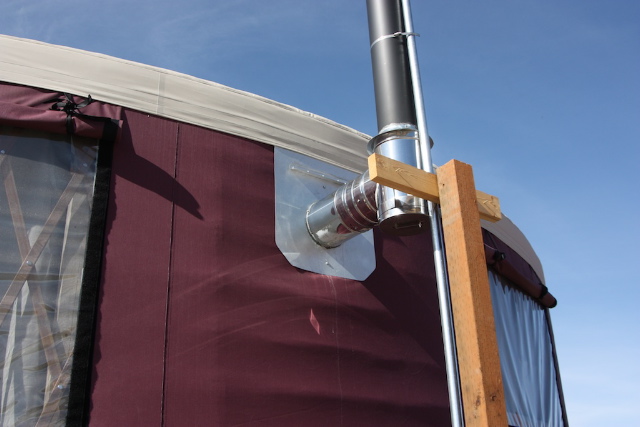
You will also want to consider the stovepipe location within the yurt. We like to see our stovepipes vented on the leeward side of the yurt to avoid smoke and embers from regularly blowing back onto the yurt. If the used yurts stove location is not on the downwind side of the yurt, you may have to look at patching up the old location and reinstall your flashing kit and heat source. This will help avoid future maintenance issues that could have been avoided.

yurt stovepipe

Will You Need Repacking and Setting Up Support? 

When you buy a used yurt for sale, you’ll want to consider how your yurt will get from point A to B. Will the seller assist in the takedown and provide shipping options, or will you have to arrange it yourself? 

What if the manufacturer is no longer in business? Mistakes and oversights can be made during the setup and the yurt may not function as intended and could be left unprotected and from the elements.

We are always happy to help folks who purchased a used Shelter Designs yurt with setup support.

Keeping Track of Yurt Hardware

An incredible amount of components and hardware are put into yurts and it can be very tedious to take everything down and keep it organized. Crucial pieces may be lost, damaged, or mislabeled during the take down or in transit if careful attention is not taken. When you purchase a new yurt, every component in the kit is clearly labeled and easy to find. We ship on dedicated full size flatbeds and the crates are simple and straightforward to unload with a forklift. You don’t have to worry about the kit being unloaded and reloaded many times during transit, which can potentially lead to damage or lost parts.

Your Yurt Platform

Every yurt needs a precisely built, round platform constructed for the yurt to sit on and anchor to. When buying a used yurt, the post and beam foundation often is not salvageable and you may have to start from ground zero. This could lead to a slow build process once the yurt is on-site. However, buying new ensures you have all the materials and resources you need for building a yurt.

Used vs New Pricing

Are you getting a good deal? It may seem like a great deal upfront, but what will the total cost be when all is said and done with transportation, set up, replacement parts, labor costs, etc. In the grand scheme of things, investing more upfront will provide crucial benefits. Consider the following:

  1. Warranty coverage – how old is your used yurt and is it still covered?
  2. Is the yurt designed for site-specific snow and wind loads?
  3. Do you have the ability to design your own door and window placement?
  4. Are the color choices what you want?
Feature Used Yurt New Yurt
Warranty Limited/Expired Full Manufacturer Warranty
Custom Design No Yes
Snow/Wind Compliance May need retrofits Site-specific engineering
Shipping/Setup Buyer responsible Manufacturer support

Things to Know Before Buying a Used Yurt

  • Design Limitations – Used yurts may have fixed door, window, and stovepipe locations that don’t match your ideal site. Customization often requires costly modifications.

  • Structural Concerns – A used yurt may not meet local snow and wind load requirements, potentially requiring retrofits like larger rafters, central columns, or tension cables.

  • Transport and Setup Challenges – Moving a used yurt can be complicated. Hardware may be lost or damaged, and platforms or foundations may need to be rebuilt from scratch.

  • Hidden Costs – The initial price of a used yurt can be misleading once shipping, setup, retrofits, and replacement parts are factored in.

  • Limited Warranty – Used yurts may no longer be covered by the manufacturer’s warranty, leaving you responsible for repairs.

  • Manufacturer Support – If the original manufacturer is out of business, finding setup guidance or replacement parts can be difficult.

  • Long-Term Considerations – Buying a new yurt ensures your design preferences, structural safety, and peace of mind, which can save time, money, and frustration over the long term.

A used yurt could be right for you if yurt cost is a concern, but listed above are some serious structural concerns regarding buying a used yurt that you should be aware of. Consider your long-term goals, the custom features you may want, and the transportation of a used yurt before making your final yurt living decision. Ultimately, the choice is yours but please we weary of some used yurts for sale. If you’re interested in our custom yurts for sale, contact us.

Frequently Asked Questions About Used Yurts

Is buying a used yurt worth it?
Buying a used yurt can save money upfront, but it may come with hidden costs, structural concerns, or limitations on customizations. A new yurt ensures proper engineering, design flexibility, and complete warranty coverage.

What are the risks of buying a used yurt?
Risks include incompatible design for your location, insufficient snow and wind load support, limited door and window placement, outdated materials, lost or damaged hardware, and costly setup or retrofitting needs.

Can a used yurt handle snow and wind loads at my site?
Not always. Used yurts may not meet local building codes or site-specific snow and wind requirements. A new yurt can be custom engineered to ensure safety and durability.

Will I be able to change the windows, doors, or stovepipe location in a used yurt?
Usually not without additional cost. Used yurts have fixed door, window, and stovepipe placements that may not suit your site or intended layout.

How difficult is it to transport and set up a used yurt?
Transporting and setting up a used yurt can be complicated. You may need to carefully pack and organize all components, hire labor, and ensure nothing is damaged or lost in transit. New yurts are shipped ready for easier assembly.

Yurt Site and Planning

Planning your Dream Yurt

Wooden Yurts vs Fabric Yurts: What You Need To Know

September 1, 2025

Looking into wooden yurts for your next vacation home or second structure?  We love yurts of all shapes, sizes, and materials at Shelter Designs!  While we offer fabric yurts for sale, the concept of yurt living as a sustainable and adventurous alternative is what we’ve built our lives around.  What is it about wooden yurts that everyone finds so interesting?  Are there benefits to living in a fabric yurt vs a wooden yurt? Well, perhaps we can help with that.  Here is the good and the bad of both wooden and fabric yurts and what considerations you should make before a purchase. 

big sky yurt rafters and center ring

Overview: Wooden vs Fabric Yurts

Both styles of yurts operate under the same engineering principles of tension and compression with a vaulted ceiling that holds itself up without the need for central supports (typically).  So, what separates them from each other?  The main differences are: 

  • Cost
  • Insulation
  • Portability
  • Assembly
  • Longevity & Maintenance

Cost Comparison

Wooden Yurts

  • Generally more expensive upfront, because you must supply additional finishes: insulation, wiring, plumbing, interior walls, flooring, etc.
  • The “kit” often includes just the structural frame, roof sheathing, rafters, and wall panels (with or without window/door rough openings).
  • After assembly, the finish-out (drywall, flooring, plumbing) may rival costs of conventional home construction.

Fabric Yurt

  • More turnkey: Shelter Designs’ fabric yurts often arrive with walls, roofing, insulation, interior finish, windows, doors, and flooring already included.
  • Less “hidden cost” later, since many components are built in by the manufacturer.
  • Lower labor burden in finish-out stages.

Interested in pricing one of our fabric yurts? Visit our yurt cost calculator to get started.

Yurt Insulation & Thermal Options

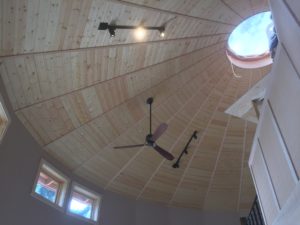
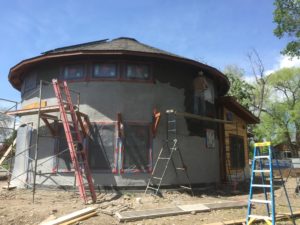
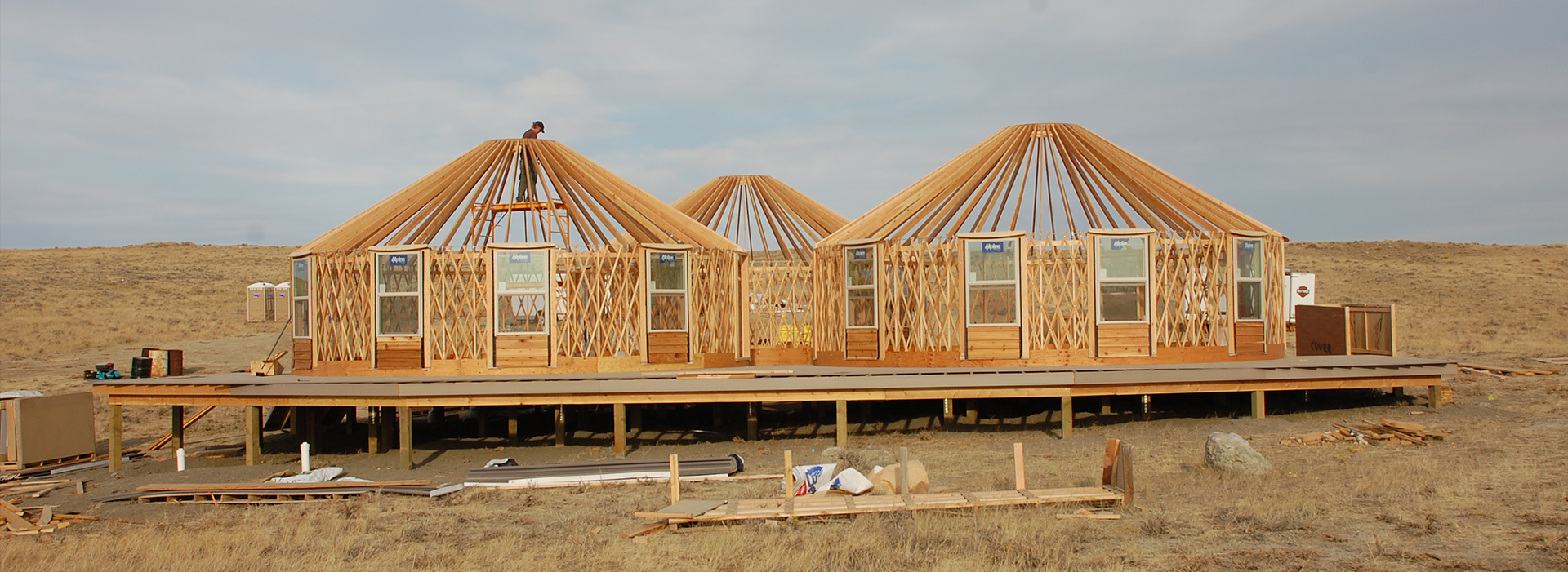
One advantage of the wooden yurt over fabric yurts is that they can be insulated with traditional modern-day insulation (fiberglass, rock wool, foam, etc), giving them a higher R value than a modern-day fabric yurt.  This is an appealing thing for some customers who are looking for a building envelope that will perform more in line with modern-day stick-built homes.  Because in the end, that’s what a wooden yurt is – a stick-built home that happens to be round!

Yurt Portability Differences

If mobility or relocation is a priority, fabric yurts generally win.

  • Wooden Yurt: Usually considered permanent; disassembly and moving is costly or impractical.
  • Fabric Yurt: Can be disassembled, packed, moved, and reassembled. Useful for semi-permanent or mobile setups.

If you plan to establish a long-term residence in one location, the portability advantage may be less relevant.

wooden yurt vs fabric yurt
Wooden yurt vs fabric yurt

Wooden vs Fabric Yurt Assembly, Maintenance & Durability

Assembly

  • Wooden yurts: The frame and structure may be erected relatively quickly by a skilled crew, but the interior and exterior finish work (drywall, insulation, trim, plumbing, wiring) is extensive.
  • Fabric yurts: Faster to erect and fewer trades required to fully assemble a yurt. Still labor-intensive, but less finishing work afterward. A fabric yurt can be set up and taken down relatively easily compared to a wooden yurt.

Shelter Designs yurts are built using all nuts and bolts, and screws – there are no nails! The assembly of our 40’ yurt is expected to take approximately 5-7 days, and you are ready to move into a warm, dry, and attractively finished interior.

Maintenance

  • Wood: Needs protection against moisture, rot, and insect damage. Maintenance of sealants and coatings is vital.
  • Fabric: Subject to wear, UV degradation, tears, and seam failure. May need periodic repair or replacement. Fabric panels offer modular replacement if sections get damaged.

Durability

  • A well-built and maintained wooden yurt can last for decades.
  • A fabric yurt, depending on materials and climate, may require maintenance or partial replacement after a couple of decades.

Key Takeaways & Things to Know

  • Wooden yurts are permanent; fabric yurts are portable.

  • Fabric yurts come ready to live in; wooden yurts require extensive finishing.

  • Assembly time: fabric yurts ~5–7 days; wooden yurts can take months.

  • Insulation: wooden yurts can achieve higher R-values; fabric yurts are pre-insulated.

  • Costs: the upfront cost is higher for wooden yurts; fabric yurts are more budget-friendly.

  • Use the Yurt Cost Calculator to run side-by-side comparisons.

  • Consult with Shelter Designs’ team to tailor the wall, roof, and floor systems to your climate, budget, and usage goals.

In the end, there is no right or wrong answer on which yurt will best suit your needs.  We love frame panel wooden yurts and think that they fill a great niche in today’s yurt market!  As we always say, we want you to get the product best suited for your needs, not what helps our bottom line out the best.  If a frame panel yurt is your best bet then do your research and pick the best company for you. If a fabric yurt is for you then we know that we are making the finest yurts on the market today and look forward to working with you. Happy yurting!


To learn more about our yurts for sale, explore our yurt kits page where you can customize your yurt online and begin planning for the cost of your yurt.

Frequently Asked Questions About Wooden and Fabric Yurts

What is the difference between a wooden yurt and a fabric yurt?
Wooden yurts (frame panel yurts) are permanent, stick-built structures with the ability to use traditional insulation and higher R-values, while fabric yurts are portable, come pre-insulated, and have a finished interior ready for immediate use.

Are wooden yurts more expensive than fabric yurts?
Yes, wooden yurts typically cost more overall because they require additional materials like insulation, interior wall and roof finishes, electrical wiring, plumbing, and flooring, whereas fabric yurts include these features in the kit.

Which yurt is better for portability?
Fabric yurts are easier to transport and take down, making them ideal for customers who want a flexible or movable structure. Wooden yurts are permanent and cannot be disassembled after construction.

How long does it take to assemble a wooden yurt vs a fabric yurt?
A large fabric yurt from Shelter Designs can typically be assembled in 5–7 days with bolts and screws. Wooden frame panel yurts require professional carpentry, equipment, and additional months of interior and exterior finishing.

Can wooden yurts be insulated like a regular home?
Yes, wooden yurts can be insulated with modern materials such as fiberglass, rock wool, or foam, which allows for higher energy efficiency and performance similar to conventional stick-built homes.

Is a wooden yurt considered a permanent structure?
Yes, wooden yurts are designed as permanent structures with fixed foundations and require professional assembly, whereas fabric yurts are semi-permanent and portable.

Planning your Dream Yurt